Concrete driveway building in La Verne CA - a driveway that sends water to the street
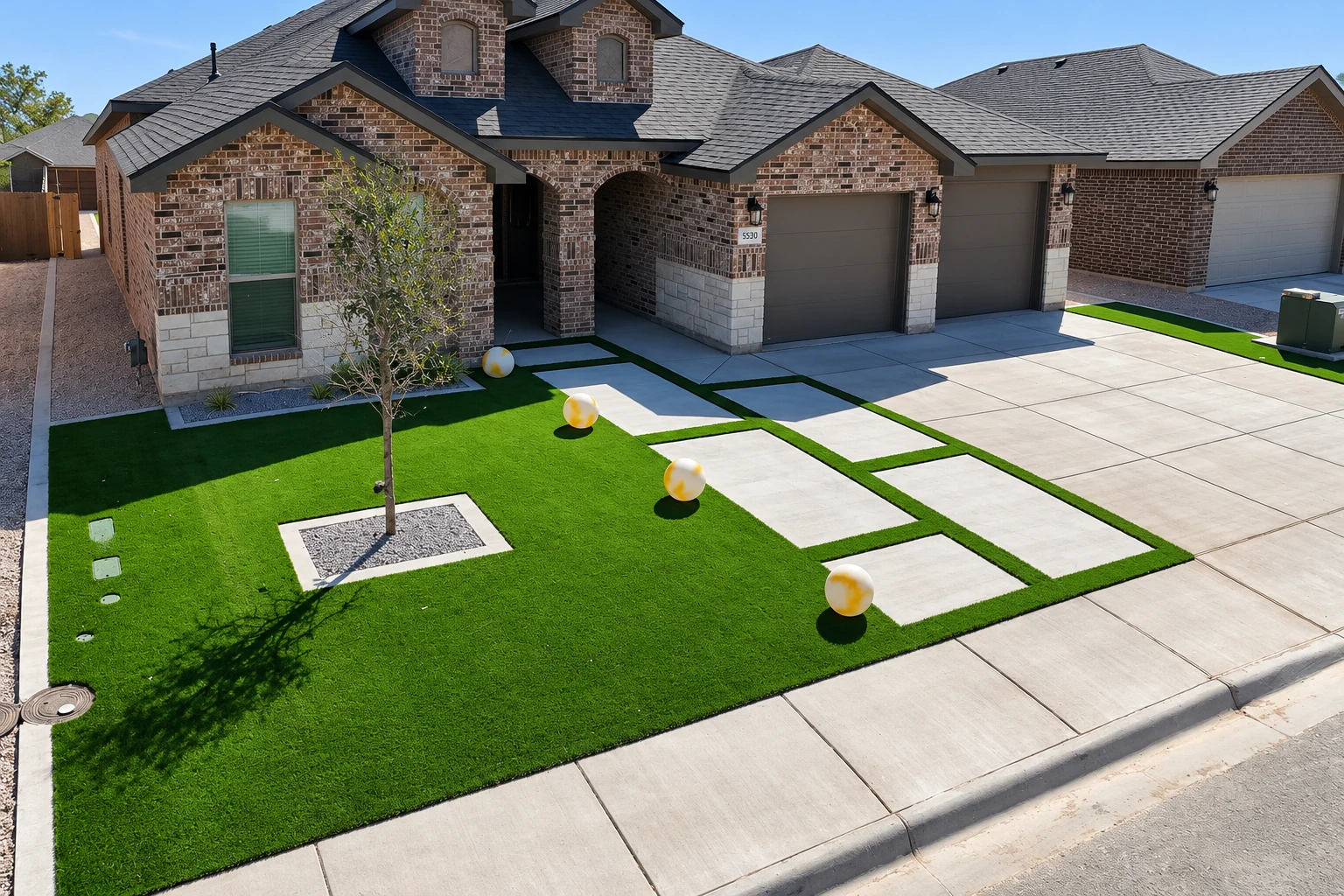
If your driveway is cracked, sinking or holding water by the garage, we build a new slab on a packed base that drains to the street.
- Fully licensed and insured.
- Free in-person estimates.
- Expect a reply within 1 business day.
What does it take to build a new concrete driveway in La Verne?
Concrete driveway building in La Verne means removing the old driveway, preparing a firm base, and forming, pouring and finishing a new slab that slopes toward the street, so rain runs off and doesn't stand by your garage. You'll park somewhere else for a while, because the new slab has to cure before it can carry a car.
Most of the calls I get come from homeowners in La Verne and the cities around it whose driveway has cracked, settled or started sending water toward the garage, and who still need to get in and out every day. The price comes down mostly to the size of the driveway, how much old concrete has to come out, how deep we need to go for a solid base, how thick the slab is and how plain or decorative the finish is. The schedule depends on the city's permit steps, the weather on pour day and the curing time before you can drive on it. When I come out, I'll measure and leave you a written estimate with the figure for your own driveway.
How can you tell your driveway needs replacing?
Cracks that keep growing
Cracks that widen or spread across the slab each year usually mean the ground underneath has moved, or the slab was never given joints to crack along. Once water gets into them, it softens the dirt under the slab, and the next section tends to go the same way.
Sections that sink or tip
When one slab drops below the next, the dirt under it has usually settled because the base was raked level and never dug out and packed. If you wait, the lip keeps growing and catches feet and tires, and patching rarely holds on ground that's still moving.
Water pooling by the garage
If rain runs toward the garage or sits in a puddle by the door, the driveway was poured falling the wrong way. Each storm sends more water under the slab and toward the house, and the fix is a new grade, which a new driveway lets us set properly.
How we handle concrete driveway building
A driveway has to send water out toward the street and away from your garage, so we set the grades before we talk about finish. We break out and haul away the old concrete, dig past the loose dirt and pack the subgrade, the soil the slab rests on, because a base that's only raked level settles and takes the slab down with it. Then we set the forms to the grade, place rebar, the steel that holds the slab together if it cracks, and pour and finish the concrete. We cut control joints, shallow grooves that give the slab a planned place to crack, while the concrete is still fresh, and most driveways get a broom finish, a light texture that gives tires and shoes grip when it's wet. If the budget has to come down somewhere, I'd rather you save on the finish than on the base, because a finish can be changed later and the base can't be reached without tearing the driveway out.
A new driveway is often a good time to look at the rest of the concrete around the house. If the back yard has an old slab or bare dirt, we can plan a concrete patio at the same visit, and if you'd like the driveway to look like stone or brick, stamped concrete presses a pattern and color into the fresh surface over the same base.
Broom-finished driveway
This suits most homes, because the light texture holds grip in the rain and keeps the look plain and clean. It's also the simpler finish, so more of the budget can go into the base under it.
Stamped or colored driveway
This suits a homeowner who wants the driveway to match the front of the house. It costs more, and we still build the base and set the grades the same way first.
Get a written estimate for your new driveway
Please send us a few details, and we'll reply within one business day to set a time for me to visit. The estimate is free and done on site, with no obligation to book. I'll look over the driveway, ask how you use it and leave you a written estimate.
(840) 588-1377What La Verne's permits mean for concrete driveway building
Whether a driveway job here needs a permit is the city's call. In La Verne, Building and Safety issues permits for construction work, and Public Works issues encroachment permits for work in the public right of way, which on a driveway usually means the part that meets the street. That encroachment permit covers only the right of way, so any other permits other agencies require still have to be in place, and it bars washing leftover material from exposed aggregate or similar finishes into the street or a storm drain. We check with the city on each job, and where a permit is needed we handle the application and set up the inspections, and when we work near the street we keep washout out of the gutter.
Many of the driveways we replace run from the street up to the garage of an older house, and the ones that hold water usually had their grade or their base skimped when they were first poured. Expansive soil, ground that swells when wet and shrinks as it dries, is common across many western states, and on it guidance calls for a crushed rock base whose depth depends on how much the soil moves. I won't guess at what's under your driveway, so if the soil isn't clear, I'll tell you it's a question for a soils engineer. We see the same kinds of driveways on jobs in San Dimas and Claremont.
What happens after you call us about a driveway in La Verne?
Call or send a request
Call (840) 588-1377 or use the form, and we'll reply to set a time for me to visit. A few words about the driveway and when you'd like it done are plenty.
I visit and write the estimate
I come out myself, look over the driveway and the street side, and ask how you park and use the space. You get a written estimate, so you know your own figure before anything is decided.
We go over the plan
Before we start, we go over the grades, the city steps and what to expect while the concrete cures. We'll also help you work out where to park until the slab is ready.
We pour, then walk it together
Our crew does the work, and I'm on site for the pour. When we're done, I walk the finished driveway with you and answer any questions.
Frequently asked questions
How much does a concrete driveway cost around Los Angeles?
A concrete driveway in the Los Angeles area usually costs about $4.10 to $10 per square foot installed, including materials, labor and site prep. That's the going range for the market, not our price, and where a job lands in it depends on removal, base work, thickness and finish. I'll give you your own figure in a written estimate once I've seen the driveway.
How thick should a concrete driveway be?
Guidance sets 4 inches as the minimum for a driveway slab. Going to 5 inches adds roughly 20% to the concrete cost, and industry figures put the gain in load-carrying capacity at nearly 50%. If you park a heavy truck, I'd usually lean toward the thicker slab, since that's where the added strength earns its cost.
How long before I can drive on a new concrete driveway?
Guidance says to let a new driveway cure for at least a week before you drive on it. Curing is the time the concrete spends hardening and gaining strength, and a car on it too early can mark or crack the surface. It helps to line up street or other parking for that first week.
What causes cracks in a new concrete driveway?
Most cracks in a new driveway come from the concrete shrinking as it dries and from ground that moves under it, and control joints are placed to help keep that cracking from running at random. That's why we pack the base and cut the joints described above. A random crack that does show up is generally not a structural problem, though it can be an eyesore.
What is the best way to pour a concrete driveway in hot weather?
Plan the pour around the weather, because hot weather trouble with fresh concrete usually shows up in summer but can happen any time of year, and a windy, sunny day calls for stricter precautions than a calm, humid one. Heat and wind pull water out of the surface too fast, which can leave a weak, dusty top. We watch the forecast and start in the cooler part of the day where we can, and it's fair to ask any crew how they'll handle the weather on your pour day.
Does a concrete contractor need a license in California?
Usually, yes. The California Contractors State License Board requires a license for work that needs a building permit, uses additional workers, or totals $1,000 or more in labor and materials, and its C-8 Concrete Contractor class covers pavement and flat concrete work. You can check any contractor's license with the board before you hire.
La Verne, CA
Start planning your new concrete driveway
If you can share the driveway's rough size in square feet and whether the work reaches the street, I can come prepared to check the city steps on the first visit.